I have often found that the state of my home directly reflects my state of mind. When things feel out of order, especially my closet, a sense of stress quietly builds up in the background. For me, a messy closet means rushed mornings, forgotten treasures, and a nagging frustration that lingers all day. That is why I believe that decluttering your closet can lead to a calmer, stress-free home environment.
Why closet clutter affects your well-being
A closet is more than storage. It is an intimate space, holding pieces of your identity and your daily routines. When crowded with clothes you do not wear or items you forgot existed, subtle stress can creep in. Every morning felt harder for me when I could not easily find what I wanted to wear. I have learned that:
- Decisions become more difficult with too many options.
- Unworn clothes cause guilt instead of joy.
- Extra clutter leads to wasted time and lost items.
Clearing out the old makes space for clarity and calm in your daily life.
Less clutter. Less stress.
How to get started the easy way
Starting is the hardest part. I used to stare at my jumbled closet and feel overwhelmed, unsure where to begin. Through trial and error, I discovered a few steps that helped me break it down into something I could handle.
Set your intention
Instead of thinking “I have to clean my closet,” I found it helped to view it as creating a sanctuary. When I started with this mindset, the process felt lighter and even meaningful. Ask yourself what you hope to achieve: More space? Less stress? Feeling more put together every day?
Gather the right supplies
Before you dive in, have some supplies handy. You will likely need:
- Bags or boxes for donations
- A hamper for laundry
- Trash bags for anything that cannot be donated
- A notepad and pen (if you want to take notes on what you need to replace)
The step-by-step decluttering process
Over the years, I have found this order works best:
- Empty the closet: Take everything out. Seeing the empty space sometimes feels intimidating at first but quickly becomes empowering.
- Sort by category: Lay out clothes in groups—shirts, pants, dresses, jackets, shoes, accessories.
- Try things on: If you are unsure about something, put it on. I have laughed at myself in old clothes that no longer fit or suit me, and that made letting go easier.
- Use the “keep, donate, discard” system: Sort every single item into one of these options.
- Clean the closet itself: Wipe down surfaces before you return anything. It is amazing how much fresher the space feels after this step.

Questions to ask before keeping an item
Letting go is not always easy. I have faced tough decisions over a favorite dress I have not worn in years or shoes that pinch but look great. The key is to ask:
- Have I worn this in the last year?
- Does it fit and feel comfortable?
- Do I feel confident when I wear it?
- Is it damaged or requires repair I am unlikely to do?
- Does it truly match my current style or lifestyle?
If I could not say yes to at least one of these, I would let it go.
Keep only what supports the person you are today.
Organizing what you keep
Once you have made decisions, it is time to put things back in a way that supports daily living. I discovered that a tidy closet saves time and creates a peaceful morning routine.
Group by use and season
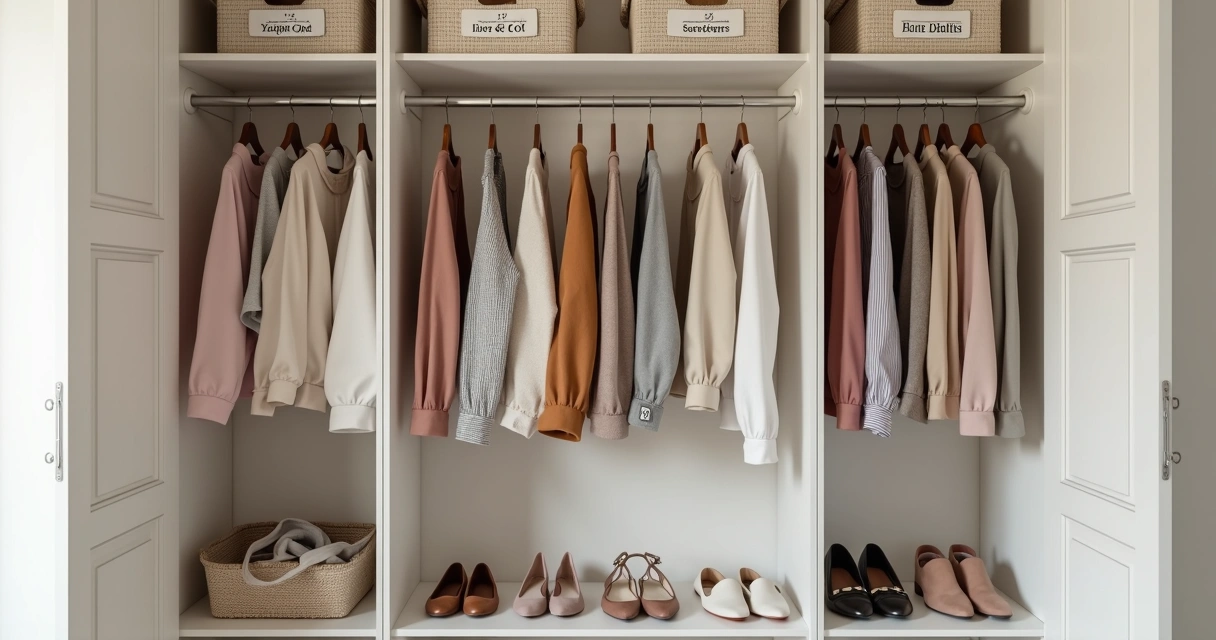
I like to keep clothes I wear most often at eye level, and things out of season or rarely used on higher shelves or tucked away. Shoes go on a rack by the door, scarves and belts in baskets or small bins. Clear separation makes everything easy to find.
Consider storage solutions
It does not have to be fancy or expensive. Over the years, I have used simple hangers, hooks, baskets, and even boxes from previous purchases to keep smaller items sorted. If you have a small closet, vertical storage and double rods can double your space.
Maintain with quick routines
I am not always perfect, but small habits help me keep things organized over time. For example, every few months, I do a five-minute tidy to rehang clothes that have slipped off or refold sweaters that have sagged. This keeps clutter from sneaking back in.
What to do with unwanted items?
Once you sort the keepers, what about everything else? Here is how I handle it:
- Donate: Clean, gently used clothes can go to a local charity or donation box. Giving old favorites a second life always feels good.
- Recycle: Items too worn to donate can often be recycled as textiles. I have found local bins for rags and old shoes.
- Sell: If you have high-quality pieces, a quick sale online or within your community can help fund something you genuinely need.
- Discard: Anything stained, torn, or unusable goes into the trash. I try to keep this pile small for the environment’s sake.
Clearing out what you do not need helps others and cuts down on waste.
Staying clutter-free for the future
After all the effort, I want to keep my closet tidy. I learned that regular review is key. Every season, I do a quick check to see if anything is no longer needed. A few other tricks help:
- Follow the “one in, one out” rule for buying new clothes.
- Try to stick with a color palette and style that suits you, so fewer items feel out of place.
- Hang clothes backward on the hanger. If after a few months the hanger is still backward, that item has not been worn and is a candidate for removal.
Make clearing out your closet a habit, not a marathon.
Decluttering your closet is about self-care
It took me some time to see that this process is not just about neat clothes. It really is about caring for myself and making room for a calmer life. Each step offers a chance to practice letting go and to surround myself only with things that help me live the way I want.
Decluttering your closet helps you rediscover lost favorites, refresh your style, and start every day with less stress and more ease.
If you feel overwhelmed now, remember that even a small step, like sorting one shelf or one pile, is still progress. Bit by bit, you can create a closet—and a home—that feels peaceful and welcoming every day.