If you’ve ever stepped on a stray building block or tripped over a misplaced doll, you likely know how quickly kids’ toys can overtake any living space. I’ve seen both sides of the coin—the joy on my child’s face with toys scattered everywhere, and the quiet sigh of relief when the floor is visible and the room feels peaceful again. Organizing kids’ toys is not just about appearance. It helps keep everyone sane and teaches responsibility in a subtle, everyday way.
Why toy organization matters in family life
I sometimes hear from friends who feel overwhelmed by the perpetual mess in their living rooms. It’s a common pain. In my experience, a tidy space is not just visually calming, but it also makes daily routines easier.
A clear floor invites both play and relaxation.
When toys have a defined place, cleanup time feels less like a chore and more like a habit. Children start to appreciate the ease of finding the doll they want or all the puzzle pieces without digging through a mountain of stuff. Setting up simple organization makes it easier for everyone—kids and adults—to relax in a shared space.
Starting with a fresh perspective
I always recommend taking a step back before organizing. Ask yourself: “What toys truly get played with?” The answer may surprise you. Children often have favorites, while some toys get ignored for months. Observing for a week helps spot which toys matter most and which ones take up space without real value.
- Pick a weekend or quiet evening to watch your kids play.
- Notice which games or types of toys they go back to again and again.
- Set aside the ones they ignore. Those are candidates for storage or donation.
- Ask your kids about their favorites. Their answers sometimes defy adult logic!
Focusing on active play favorites prevents living areas from overflowing with unused toys.
Sorting: The art of grouping toys
Once you’ve decided what stays, the next step is to sort. I find it easiest to do this together with the kids. Turning it into a “toy-hunting” game sometimes gets them excited to help.
- Group by type: cars with cars, dolls with dolls, art supplies together.
- Separate by use: outdoor toys, bath toys, puzzles, construction sets.
- Watch out for tiny pieces. Keep those in smaller containers to avoid losses.
- For mixed sets (like play kitchens), decide with your child where they like to keep their items.
Well-chosen groups make cleanup and playtime more intuitive for children and grown-ups alike.
Choosing storage solutions that make sense
After sorting, it’s time to think about storage. I always recommend looking at the space you have first, not the perfect image in your head. What works in one family’s living room might be awkward or impractical in another’s.
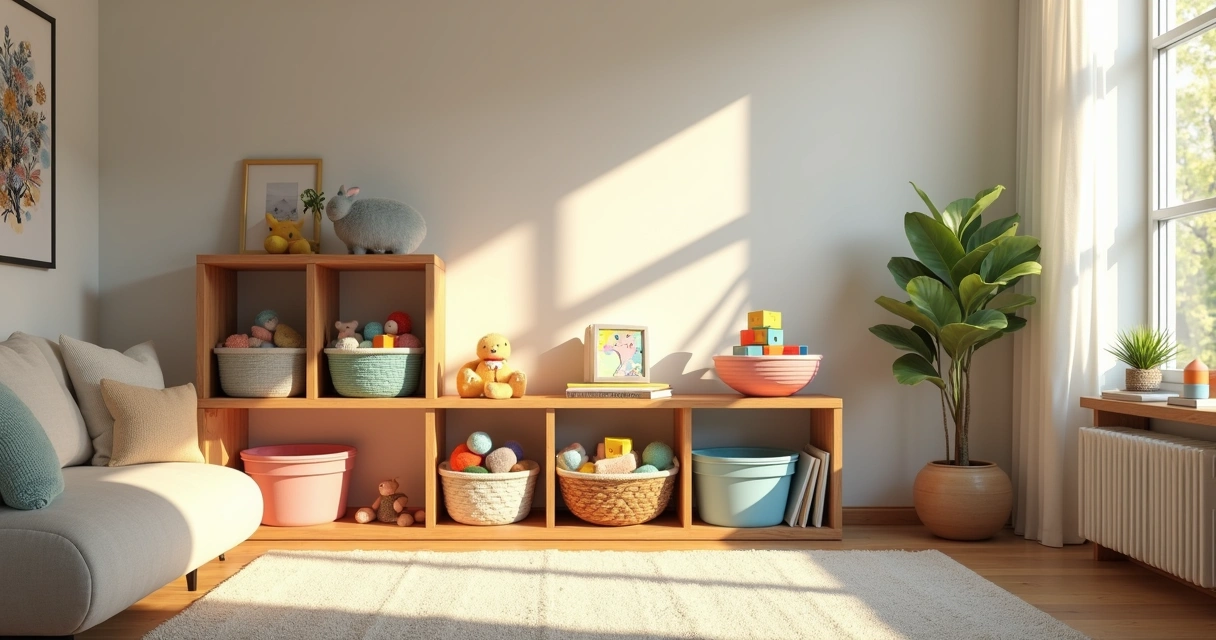
In my home, a mix of containers, open shelving, and a single chest has worked best. Here’s what I consider when picking storage:
- Baskets and bins: Easy for quick toss-in cleanup and friendly for tiny hands.
- Clear containers: Let kids see what’s inside, reducing the frantic dumping of every bin just to find a single action figure.
- Labeling: Whether stickers, words, or photos, labels help kids learn where things live. I even took small photos of favorite toy types and taped them to bins for little ones who weren’t reading yet.
- Shelves and cubes: Open shelves give toys a visible home, which works well for larger items like trucks or dolls.
- Under-sofa boxes: Flat containers that slide under the couch hide things out of sight but keep them close for play.
I found that mixing open and closed storage stops both clutter and the “out of sight, out of mind” problem. Keep frequently used toys in the easiest spots to reach.
Making organizing a daily habit with kids
For me, the hardest part was not getting organized, but staying organized. At first, my system would crumble after a few days of busy life. I realized that making organizing part of a routine helps it stick—for everyone.
A few minutes each night is easier than a weekend of deep cleaning.
Here’s what worked for me:
- Set a five-minute timer after dinner. Make it a game: “How many toys can we put away before the timer ends?”
- Sing a tidy-up song that kids recognize as the cleanup cue.
- Offer praise for the effort rather than perfection. A little encouragement goes a long way.
- Rotate helpers if you have more than one child. Sometimes a turn system helps avoid squabbles.
Small, regular actions keep chaos at bay and teach children that organization is simply part of the day.
Getting creative with limited space
When space is tight, I’ve found that vertical storage is a lifesaver. Wall-mounted shelves, over-door organizers, or even sturdy hooks can hold dress-up clothes or baskets of plush animals. For tiny apartments, a single storage ottoman in the main room does double duty as seating and a toy chest.
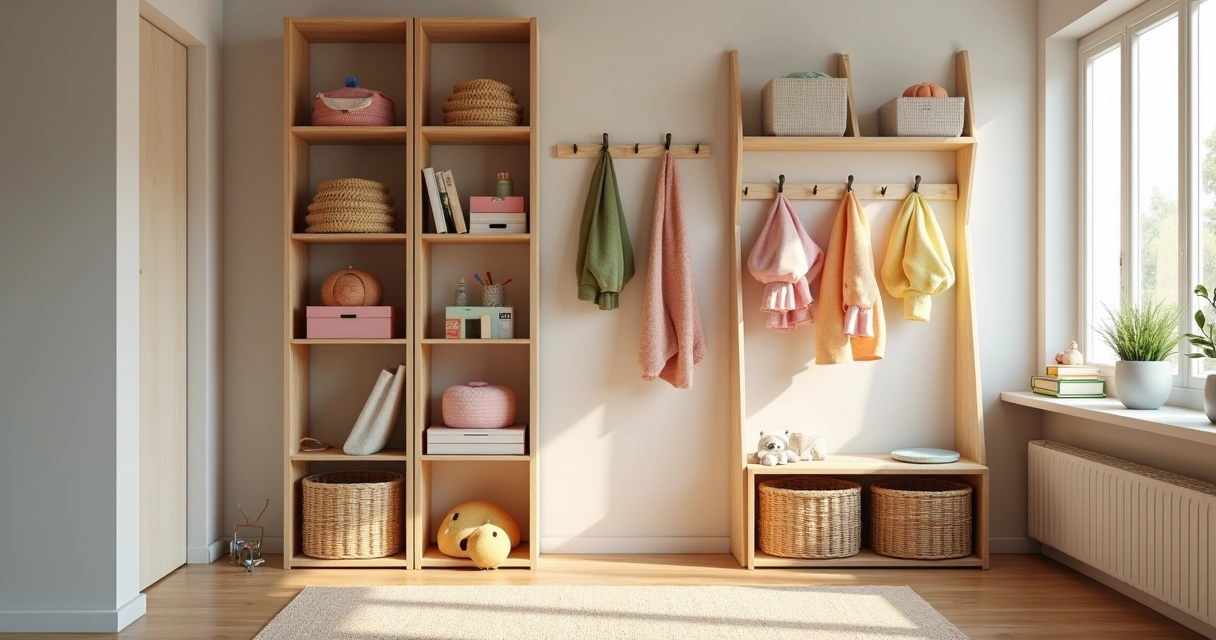
Multipurpose furniture is another trick I rely on. We once had a coffee table with hidden storage inside, where blocks or art supplies would disappear at bedtime. Look for places where you can add a bin or basket without crowding the room.
Using walls and furniture for storage adds valuable space without making the area feel crowded or cluttered.
Keeping only what brings joy or learning
Every two or three months, I set aside time to reassess. Toys accumulate quickly, especially after birthdays or holidays. I sort with my child, asking “Do you still play with this?” or “Do you want to keep it or give it to someone else?” Children often surprise me with their generosity and willingness to let go. Sometimes, nostalgia gets in the way, but usually, it passes, and we find new homes for unused toys.
- Get children involved in choosing what stays and what goes.
- Donate or pass down items in good condition.
- Keep a few special toys for memory boxes but resist the urge to keep everything.
Less clutter means more space to imagine.
This rolling process makes life at home lighter and helps children learn that letting go can be positive.
Teaching independence and responsibility
In my experience, when children know where things go, they feel in control. It’s a small way to build responsibility and pride. Give them choices about how to sort or what bin to use. Soon, you may find them putting away toys without your asking.
Even small children are capable of understanding organization when it’s made simple and visible.
Organization grows with your children. As they age, adjust systems together. What works for toddlers likely won’t suit a seven-year-old. Stay flexible and open to their ideas about what helps them both play and feel comfortable in their space.
Final reflections on toy organization
Every home and every child is different. My own path to organizing kids’ toys has included trial, error, and plenty of laughter. I have learned that a tidy living space is not a sign of perfection—it’s a foundation for restful evenings, creative play, and more connection as a family. Start simple, involve the kids, use what space you have, and let go of the idea that everything must be perfectly in place at all times.
The best toy is often space to play.
Organizing toys is an ongoing story, not a single event. With each little step, the living room (and everyone’s mood) gets a bit lighter.