Having a small kitchen can feel overwhelming when there’s barely any space to move, let alone store everything you need. I used to find myself stepping over pans or bending into odd angles just to get to the salt. But with a little creativity and a few smart strategies, I discovered that even the tiniest kitchen can work smoothly. Here are the best tips I’ve learned for making a small kitchen feel bigger, more practical, and far less stressful.
Start by decluttering ruthlessly
In my experience, the biggest transformation starts with letting go. The less you have cluttering up your kitchen, the easier it becomes to organize what remains. This can be a tough process if you have sentimental items or feel guilty about unused gadgets, but it pays off quickly.
- Take everything out of drawers, cabinets, and shelves. Put it all on the counter or kitchen table so you can see what you own.
- Sort items into three groups: keep, donate, or discard. If you haven’t used something in over a year, strongly consider letting it go.
- Group similar items together. I found it handy to organize by use: baking tools, everyday cooking items, seasonal pieces, etc.
Once clutter is cleared, you see the true potential of your kitchen space.
Use vertical space wisely
One afternoon, while reaching for a pot, I noticed all the empty wall space above my counters. Vertical storage can double your usable space in an instant. Here’s how I now use my kitchen walls:
- Install sturdy hooks for mugs, pans, or utensils.
- Set up magnetic strips to store knives or metal spice containers.
- Try wall-mounted racks for cutting boards or bakeware.
- Add open shelves above cabinets or windows to hold less-frequently used items.
Look up. Your walls are storage waiting to happen.
Pick smart storage containers
There was a time when I had bags of rice and half-filled pasta boxes jammed into different corners. Then I switched to clear, stackable containers in a range of sizes. The difference? I now actually know what I have at a glance.
- Choose clear containers that fit neatly on the shelf.
- Label everything, so there’s no guessing.
- Stack similar items, like snacks or baking ingredients, in one bin for easy reach.
Uniform containers look tidy and free up extra inches for other essentials.
Double-duty furniture is a game changer
When storage is tight, each piece of furniture should offer more than just one purpose. In my kitchen, a slim rolling cart provides extra counter space while also housing my most-used utensils, spices, and small appliances.
- Look for kitchen islands with built-in shelves or drawers.
- Fold-out tables or drop-leaf counters can provide space when you need it and fold away when not in use.
- Choose bar stools that tuck under the counter to keep walkways clear.
Even something as simple as a bench with hidden storage can make a big impact.
Master the art of drawer organization
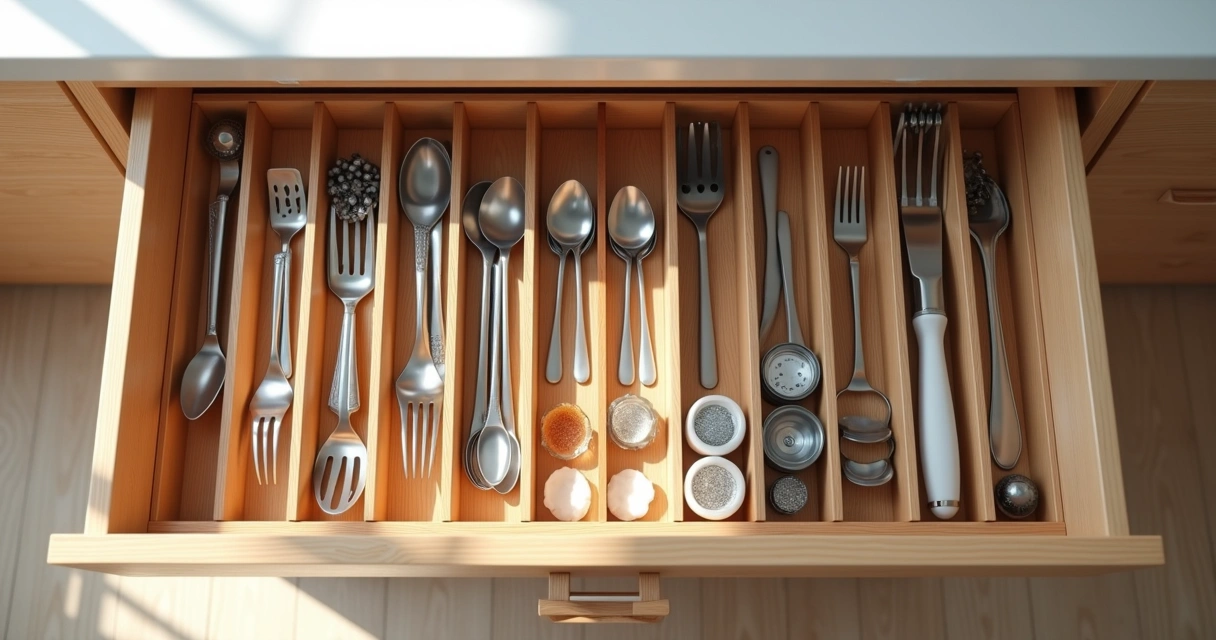
Few things are as frustrating as rooting around for a whisk and pulling out five random utensils instead. I’ve found drawer organizers, cutlery trays, and dividers to be lifesavers.
- Use expandable drawer dividers to create custom sections for utensils and kitchen tools.
- Sort drawers by type or use: one for baking, one for prep, one for cooking tools.
- Consider vertical storage within drawers too, like standing spatulas upright instead of piling them flat.
Finding what you need quickly can change your experience in a small kitchen.
Think inside the cabinet doors
It took me years to notice that the backs of my cabinet doors were a blank canvas. Now, I use adhesive hooks or slim racks to store pot lids, measuring spoons, or oven mitts on the inside of doors, freeing up precious shelf space.
- Install a shallow spice rack or packet organizer inside a pantry or cupboard door.
- Hang cleaning tools, like brush heads or small towels, out of sight.
- Store lids vertically so they don’t eat up shelf space.
Hidden storage inside cabinet doors makes things easy to grab, yet out of the way.
Limit what lives on the counter
I used to believe my counters should be lined with appliances and jars, until I realized this just made my kitchen look and feel smaller. Now, I only keep everyday essentials out.
- Limit to one or two small appliances, like a kettle or toaster.
- Store cooking utensils you use daily in a small, neat container.
- Keep counters clear for meal prep and make your whole kitchen feel more open.
The result? The simple act of keeping surfaces clear makes the kitchen more welcoming.
Rotate and review often
Just as clothes in a closet can multiply without notice, kitchen supplies do too. Every few months, I set aside a little time to check what needs to be kept and what no longer serves its purpose.
- Move older items to the front so they get used before expiring or going stale.
- Seasonal gadgets, like holiday cookie cutters, can be stored in a bin or another room and rotated in as needed.
- Set aside a basket or small box for items you’re unsure about; review it after a month to see if you’ve missed them or not.
Regular, gentle reviews help your kitchen stay organized for the long run.
Make the most of open shelving
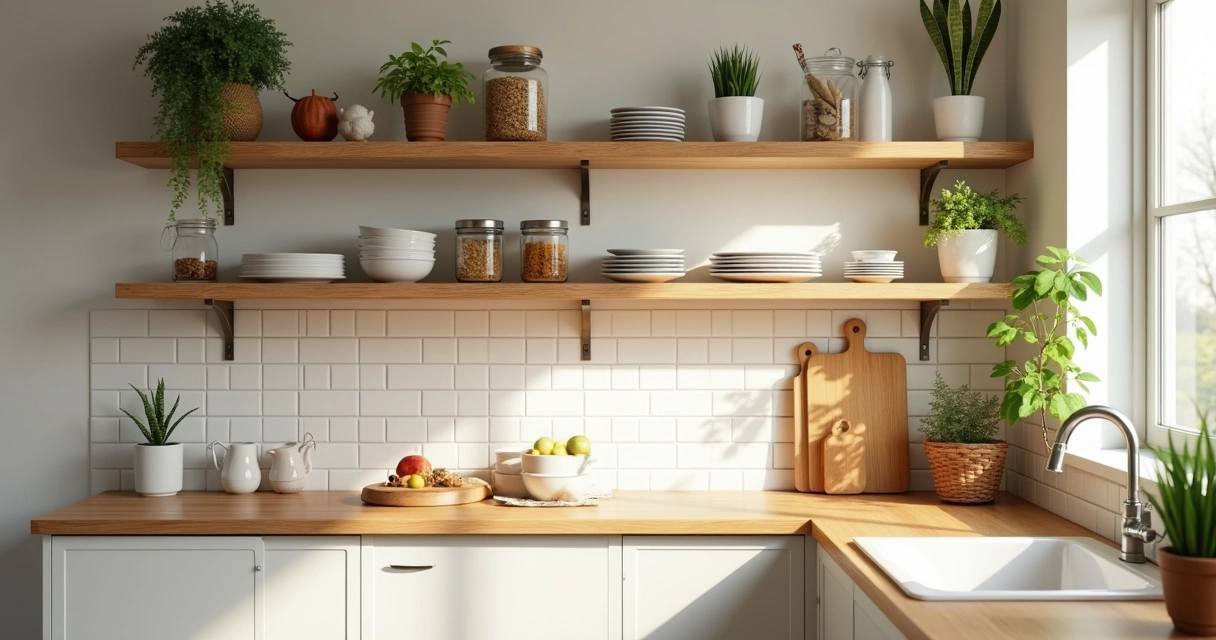
Open shelves, when neatly arranged, can make a kitchen feel airier and more functional. I was hesitant at first, worried everything would look messy, but with some grouped baskets and jars, I found open shelving wasn’t just beautiful, but practical.
- Store your prettiest plates, bowls, or glassware on open shelves as both decor and storage.
- Use small baskets or containers to keep loose items together.
- Mix practical items with a few decorative touches, like a small plant or a favorite cookbook, to soften the look.
Group by color or use for a cohesive, uncluttered appearance.
Maximize awkward spaces
Every home I’ve lived in had at least one awkward spot—a corner, a gap between appliances, or a narrow strip by the fridge. With the right approach, even those spaces can hold a lot.
- Install a pull-out narrow tower for spices or canned goods next to the fridge or oven.
- Add a corner carousel or “lazy Susan” inside deep cabinets to keep items easy to reach.
- Place baskets or bins in under-sink space for soaps and cleaning products.
Small changes in overlooked spots can feel like a big win.
Prioritize what supports your lifestyle
Every tip above helped me, but the most useful thing was taking stock of how I actually live and cook. I used to keep lots of baking gear, but I rarely bake—so why let it claim my best cabinet? Now, I put the things I use every single week within arm’s reach, and store less-used items higher up or elsewhere.
- Keep daily-use items at chest or counter height.
- Store rarely-used gadgets in harder-to-reach spots.
- Be honest with yourself about your cooking habits. Let your storage reflect your real life, not just your dream kitchen.
Your kitchen should work for you, not the other way around.
Final thoughts
Organizing a small kitchen with limited storage isn’t about perfection or buying all new things. For me, it was about being realistic, creative, and seeing the space in a new way. Every little improvement, from container choices to shelf placement, built up to a kitchen I truly enjoy using.
Small steps add up to big changes.
Take a look around your kitchen today. Decide on just one small change to make, and watch how it inspires you to keep going. Sometimes, all it takes is a fresh perspective—and a bit of effort—to make even the smallest kitchen shine.